IAY/PMAYG Beneficiary – Check Status & List 2026
If you or someone in your family applied for a government housing scheme and you’re not sure whether the name is on the approved list, trust me — that confusion is very common. Every week, I come across people asking: “How do I check if I am a PMAYG beneficiary?” or “Why is my name not showing on the portal?” These are genuine concerns, and they deserve a clear, honest answer.
In this guide, I’ll walk you through everything related to the IAY/PMAYG beneficiary — what the scheme is, who qualifies, how to check your status, and what to do if something seems wrong. I’ve tried to keep it simple and practical, just like explaining it to a neighbour.
At a Glance: Key Details
| Detail | Information |
| Scheme Name | Pradhan Mantri Awaas Yojana – Gramin (PMAYG) |
| Previous Name | Indira Awaas Yojana (IAY) |
| Purpose | Provide pucca housing to rural homeless and houseless families |
| Financial Assistance | Up to ₹1.20 lakh (plain areas) / ₹1.30 lakh (hilly/difficult areas) |
| Target Beneficiaries | BPL families in rural India, especially SC/ST, Indigenous peoples, disabled |
| Latest Year | 2026 |
| Official Website | pmayg.nic.in |
My Real-World Experience with PMAYG Beneficiaries
A few months back, I was helping a relative from a village in Uttar Pradesh who had applied for PMAYG housing assistance two years ago. She was told by her local panchayat that her name was selected, but she never received any payment or construction support. When we finally checked the official pmayg.nic.in portal together, her name was indeed on the list — but her bank account details were incorrect in the system.
That one small error had delayed her benefit for over a year. After correcting the details through the Block Development Office, things moved quickly. The experience made me realise how important it is for people to periodically check their beneficiary details — not just once, but every few months. A lot of delays happen because of data mismatches, not because the government hasn’t processed the application.
This is something I’ve observed in multiple cases: the benefit is approved, but the paperwork or bank details are wrong. Always verify your details on the portal.
What is the PMAYG Scheme?
PMAYG, short for Pradhan Mantri Awaas Yojana – Gramin, is the central government’s flagship rural housing programme. It replaced the older Indira Awaas Yojana (IAY) back in 2016. The core idea is straightforward: every rural family that doesn’t have a proper house should get financial help to build one.
The scheme provides direct financial assistance to eligible families. In plain areas, this is up to ₹1.20 lakh, and in hilly or difficult terrain areas (like the Northeast or certain hill districts), it goes up to ₹1.30 lakh. On top of that, beneficiaries also get 90 days of wage support under MGNREGS and assistance for a toilet under Swachh Bharat Mission.
Beneficiaries are selected based on the Socio-Economic and Caste Census (SECC) 2011 data and verified by the Gram Sabha. So the process isn’t random — it’s based on documented need.
Eligibility Criteria for PMAYG Beneficiaries
Before checking your status, it helps to know whether you’re actually eligible. Here’s who qualifies:
- Families listed in the SECC 2011 database as houseless or living in zero, one, or two-room kutcha houses
- SC/ST families with no pucca house
- Families with no adult male member aged 16–59 years (women-headed households)
- Families with a disabled member as the breadwinner
- Landless agricultural labourers from minority communities
- Families living in early tribal groups or legally released bonded labourers
Who is NOT eligible:
- Families who already own a pucca house anywhere in India
- Those not in the SECC 2011 database — unless added through an officially approved process
- Government employees or families with a member earning over ₹10,000/month (in some state interpretations)
- Families with a motorised vehicle, farm equipment, or Kisan Credit Card above a set limit
Required Documents
When verifying your beneficiary status or applying through local authorities, you may need:
- Aadhaar Card – for identity verification and DBT-linked transfers
- Bank Passbook (linked to Aadhaar) – all payments go directly to your bank account
- BPL/Ration Card – as proof of economic status
- SECC 2011 registration copy – if available
- Caste Certificate – for SC/ST applicants to confirm category
- Photograph – recent passport-sized photo
- Mobile number – for OTP-based login and updates on the portal
How to Check Your IAY/PMAYG Beneficiary Status (Step-by-Step)
The official portal to check everything related to PMAYG is pmayg.nic.in. Here’s how to go through it:
Step 1: Visit the Official Website
Open a browser and go to https://pmayg.nic.in. This is the only official portal — avoid third-party sites that may show outdated information.
[Screenshot suggestion: Home page of pmayg.nic.in showing the main menu]
Step 2: Click on ‘Stakeholders’
On the top navigation bar, find and click the ‘Stakeholders’ menu. From the dropdown, select ‘IAY/PMAYG Beneficiary’.
Step 3: Search by Registration Number or Name
You’ll land on a search page. You can search either by:
- Registration Number (if you have it from your panchayat or previous application)
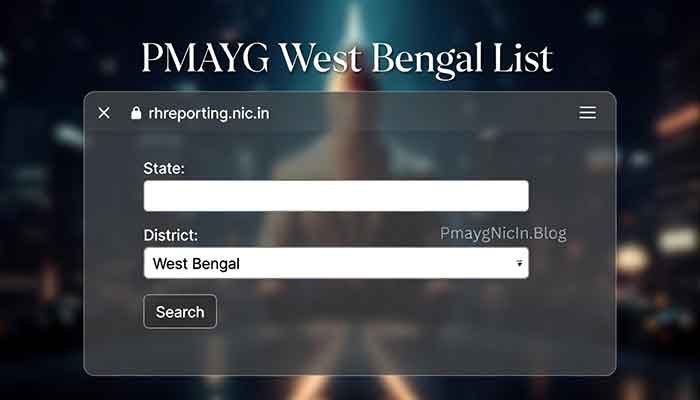
- Alternatively, use the Advance Search option to search by State, District, Block, Panchayat, and Year
Step 4: View Your Beneficiary Details
Once found, click on your name. You’ll be able to see your full beneficiary details — including the amount sanctioned, payment status, and bank account information stored in the system.
[Screenshot suggestion: Beneficiary detail page showing payment installments and current status]
Step 5: Cross-Check and Report Issues
If your bank details are wrong, contact your Block Development Office (BDO) immediately with your Aadhaar and bank passbook. Corrections can only be made through official channels.
Common Problems Users Face & How to Solve Them
Problem 1: Name not showing in the beneficiary list
This usually happens when the name was not in the SECC 2011 data or the Gram Sabha hasn’t verified it yet. Solution: Contact your Gram Pradhan or Block Development Officer to check if your application has been submitted properly.
Problem 2: Payment not received despite approval
Check your bank account details on the portal. Wrong account numbers or non-Aadhaar-linked accounts are the most common cause. Visit your BDO to correct the bank details.
Problem 3: Portal not loading or showing errors
The PMAYG portal sometimes has slow performance during peak hours. Try accessing it early in the morning or use a different browser. Clearing your cache can also help.
Problem 4: Wrong name spelling or Aadhaar mismatch
If there’s a spelling mismatch between your Aadhaar and the portal data, it can delay payments. Contact the Block Office with a copy of your Aadhaar and a correction request.
Problem 5: Middlemen asking for fees
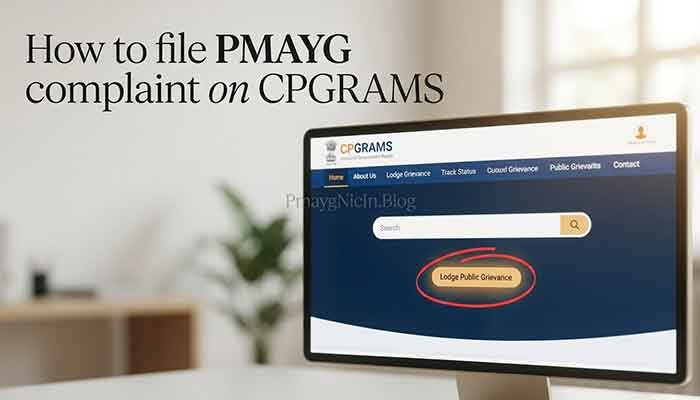
The PMAYG application and status check process is completely free. If anyone is asking for money to add your name or check your status, that’s fraud. Report it to your Block Development Office or use the grievance section on the official portal.
Frequently Asked Questions (FAQs)
Go to pmayg.nic.in, click on ‘Stakeholders’, then ‘IAY/PMAYG Beneficiary’, and search by your registration number or using the Advance Search with your location details. The whole process takes about 2 minutes.
Yes. The official portal is updated regularly. You can search by year and Gram Panchayat to view the latest list for 2026.
IAY has been subsumed into PMAYG since 2016. Old IAY registrations are now part of the PMAYG database. You can still search your name using the IAY/PMAYG Beneficiary search option on the portal.
No. Beneficiary selection is done through the SECC 2011 database and Gram Sabha verification — not through direct online applications. If you believe you’re eligible but not listed, contact your Gram Panchayat or Block Office.
The financial assistance is typically released in 3 instalments — linked to stages of construction. Each instalment is verified through geotagged photographs uploaded on the AwaasSoft portal by field workers.
Important Disclaimer
This article is written purely for informational purposes by an independent research blog (Pmayg Nic In.blog). We are not affiliated with the Government of India, the Ministry of Rural Development, or any official PMAYG authority. All scheme details, eligibility criteria, and procedures mentioned here are based on publicly available government information as of 2026. For the most accurate and up-to-date information, please always refer to the official PMAYG portal at pmayg.nic.in or contact your nearest Block Development Office.
Conclusion
Checking your IAY/PMAYG beneficiary status isn’t complicated once you know where to look. The official portal at pmayg.nic.in has all the information you need — from your registration details to the payment history.
The most important thing I’d tell anyone going through this process: don’t rely on middlemen. Check directly, and if you spot any error in your data, go to your Block Development Office right away. Most delays are fixable — they just need someone to act on them.
If this guide helped you, feel free to share it with someone who might need it. And if you have a question I didn’t cover, drop it in the comments — I’ll do my best to help.