
PMAYG Installment Details: Check Your Awas Yojana Payment
Hello, I’m Suman. Through my work at Pmayg Nic In.blog, I’ve spoken with many people who are happy to be part of the Pradhan Mantri Awas Yojana Gramin (PMAY-G) but are often confused about when and how they’ll receive the money. They anxiously wait for the installment to hit their bank account so they can continue building their homes. If you’re in a similar situation, don’t worry. In this guide, I’ll walk you through everything you need to know about your PMAYG installment details, drawing from my experience helping others navigate this process.
Quick Summary (At a Glance)
| Detail | Description |
| Scheme Name | Pradhan Mantri Awas Yojana – Gramin (PMAY-G) |
| Purpose | To provide financial assistance to eligible rural families for constructing a ‘pucca’ (permanent) house. |
| Benefit / Key Information | Financial aid of ₹1.20 lakh in plain areas and ₹1.30 lakh in hilly or difficult areas. |
| Latest Update / Status | The scheme has been extended, with a focus on including more families and ensuring timely payments. |
| Official Website | pmayg.nic.in |
My Real-World Experience
I remember helping a man from a small village who was struggling to find information about his second installment. He had started the construction but had to stop because the funds hadn’t arrived. He was worried and had visited the local office multiple times without a clear answer. I showed him how to track the Fund Transfer Order (FTO) on the official website. He was relieved to see that the payment had been processed and was on its way. This experience taught me how important it is for beneficiaries to have direct access to this information.
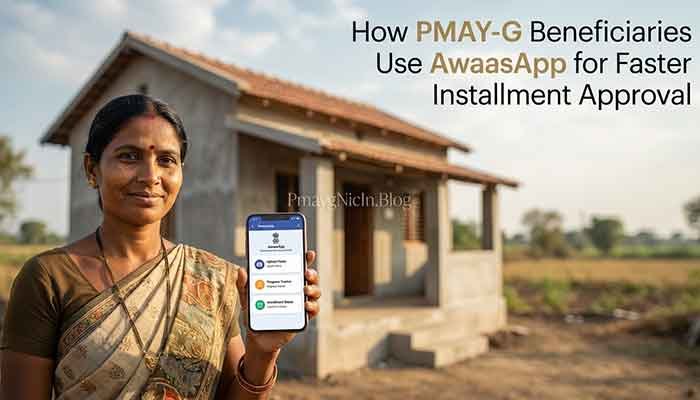
Read More: PMAYG AwaasApp – Complete Guide (2026)
What are PMAY-G Payment Details & Installments?
PMAY-G provides financial assistance directly to the beneficiary’s bank account, but it doesn’t come all at once. The money is given in installments, usually three, tied to the progress of the house construction.
This ensures that the funds are used for their intended purpose. The installments are transferred through a system called Direct Benefit Transfer (DBT).
Eligibility Criteria
Not everyone is eligible for this scheme. The primary beneficiaries are houseless families or those living in dilapidated or kutcha houses.
Who is eligible?
- Families without a permanent house.
- Households from Scheduled Castes (SCs), Scheduled group (STs), and minority communities.
- Families with no adult member between the ages of 16 and 59.
- Female-headed households with no adult male member between 16 and 59.
- Households with a disabled member and no other able-bodied adult.
Who is NOT eligible?
- Individuals who own a motorized two, three, or four-wheeler.
- Households with a member who is a government employee.
- Families earning more than ₹10,000 per month.
- Those who own a refrigerator or a landline phone connection.
Required Documents
To apply for the scheme and receive payments, you’ll need a few key documents.
| Document | Why it’s needed |
| Aadhaar Card | For identity verification and linking your bank account. |
| MGNREGA Job Card | To verify your status as a rural laborer. |
| Bank Account Details | For the direct transfer of funds. |
| Swachh Bharat Mission (SBM) Number | To link with the toilet construction component. |
| Consent Form | To authorize the use of your Aadhaar information. |
How to Check PMAYG Installment Details (Step-by-Step)
You can check your payment status online, which gives you real-time information.
Step 1: Visit the Official Portal
The easiest way is through the UMANG website or the official PMAY-G portal (pmayg.nic.in).
Step 2: Find the Beneficiary Section
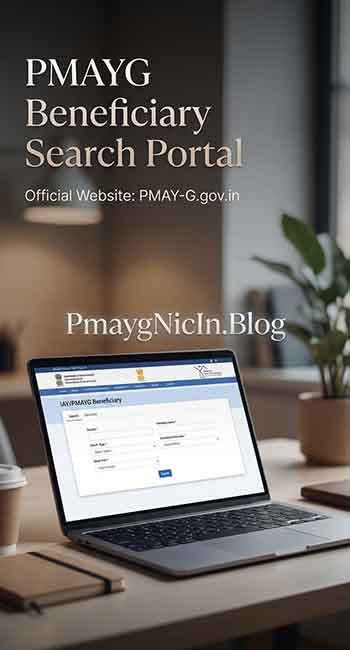
On the homepage, look for a “Stakeholders” tab. Under this, you’ll find an option like “IAY/PMAYG Beneficiary”.
Step 3: Enter Your Details
You can search for your details using your Registration Number. If you don’t have it, you can use the “Advanced Search” to find your name by providing your state, district, block, and panchayat.
Step 4: Track Your Installment
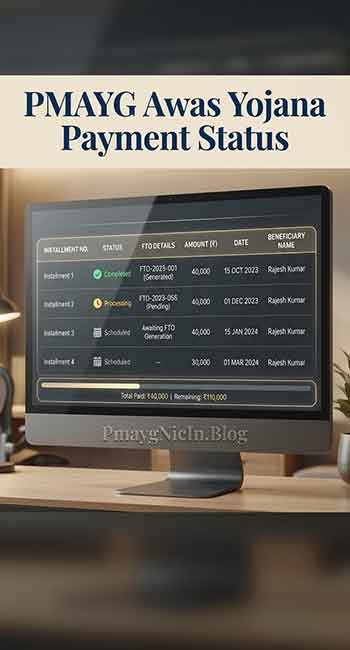
Once you find your profile, you can view the status of each installment, including the amount, installment number, and the FTO (Fund Transfer Order) date.
Common Problems Users Face & Solutions
- Payment Delayed: Sometimes, there can be a delay between the FTO date and the money being credited to your account.
- Solution: Wait for 3-5 working days. If the delay persists, contact your bank or the block office with your FTO details.
- Incorrect Bank Account Details: A wrong account number can lead to payment failure.
- Solution: Ensure your bank account is correctly linked to your Aadhaar. If there’s an error, get it corrected at the block office.
- Name Not on the List: You might not find your name on the beneficiary list.
- Solution: Your name is included based on the SECC 2011 data and Gram Sabha verification.
- If you believe you are eligible, you can inquire at your Gram Panchayat.
Frequently Asked Questions (FAQs)
The amount can vary. For example, in some areas, the first installment is ₹60,000, the second is ₹50,000, and the third is ₹10,000.
FTO stands for Fund Transfer Order. It’s a confirmation that the government has processed your payment. You can track this on the PMAY-G website.
No, the assistance is provided in at least three installments tied to the stages of construction.
You can use the “Advanced Search” option on the official website and search using your name and location details.
Important Disclaimer
The information provided here is for educational and guidance purposes only. I have compiled it based on my research and experience to help you. However, you should always verify the details on the official Pradhan Mantri Awas Yojana – Gramin website (pmayg.nic.in) or consult with your local block office.
Conclusion
I hope this guide has made it easier for you to understand the PMAYG installment details. The government has created online systems to bring transparency, and knowing how to use them can save you a lot of anxiety. Building a home is a big dream, and with the right information, you can navigate the process smoothly.
If you found this guide helpful, please share it with others who might need it. If you have more questions, feel free to ask in the comments below